
My grandmother had what must have been Alzheimer’s disease, but no one ever called it that. When I visited her in the…
New Study on the Origin of Syphilis. America First?
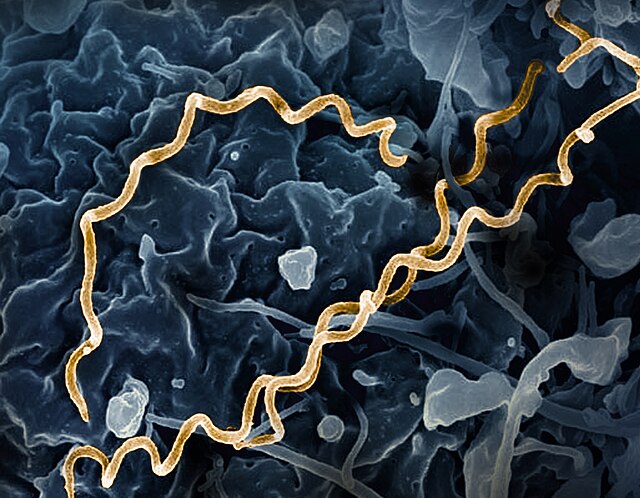
With the pandemic past and vaccine-preventable infectious diseases creeping back, we don’t think often about syphilis.
A new report in Science, from Davide Bozzi of the University of Lausanne, Switzerland and colleagues, uses DNA evidence to rewrite what we thought we knew about how and when European explorers brought the sexually transmitted infection here. It turns out, they likely didn’t.
The genome sequence from a recently-discovered sample of a close relative of the modern bacterium that causes syphilis, in Sabana de Bogotá, Colombia, backdates the origin of the STI in North America to much earlier than previously thought. So European explorers might have picked the STI up here and brought it home, where it spread in the late 15th century.
The bacterium Treponema pallidum causes syphilis, which belongs to a group of infectious diseases caused by spiral-shaped bacteria (spirochetes) that includes yaws, bejel, and pinta. People have suffered with these diseases for thousands of years, but evidence from human remains is sparse, because the bacteria crumble bones. Obtaining long enough DNA molecules to overlap them and deduce the genome sequence from ancient microbial pathogens has been difficult.
Syphilis Basics
Today syphilis is vanquished with a dose of penicillin, but not everyone has access to antibiotics, and 5.6 million cases still happen annually. About 350,000 cases are passed during childbirth. The destruction of the United States Agency for International Development (USAID) last year has worsened the situation, placing syphilis on the list of resurging infectious diseases.
Today, the type of antibiotic to treat syphilis – benzathine penicillin G – is in short supply in medically underserved populations. Incidence of the disease is actually on the rise, according to NIAID, an agency of the NIH that was gutted in last year’s purge of medical experts.
Syphilis begins with a usually painless sore in the body part that encountered the pathogen. It spreads readily through contact with infected areas, including during birth, breastfeeding, and of course sex. Then the bacteria hide, perhaps for many years, before awakening and attacking major organs, including the brain and heart. It also causes congenital abnormalities, stillbirths, and newborn deaths. CDC reported nearly 4,000 cases of newborn syphilis in the US in 2024.
Perhaps the most interesting aspect of syphilis is the roster of famous folk who had it. Cases include Napoleon, Franz Schubert, Adolf Hitler, Al Capone, Idi Amin, and Howard Hughes. But it wasn’t just dictators and the wealthy. Famed fruit fly geneticist Calvin Bridges had it too.
A New World Origin
How, when, and where did syphilis take hold in the US? Tracing the trajectory through the pathogen’s genome sequence, from different times, has been challenging because the bacterial DNA had to be replicated in rabbits to collect enough of it to overlap pieces to derive the sequence of DNA bases.
The first Treponema pallidum genome sequence was published in 1998. In 2018, more complete sequencing dated the oldest then-known specimen in the Americas to about 2,500 years ago.
The new study used a novel approach, called pooled segment genome sequencing, to more accurately and completely sequence the Treponema genome, revealing the “deep antiquity of treponemal diseases in the Americas,” according to the researchers.
The ancient bacterial DNA came from a bone of a 5,500-year-old hunter-gatherer who lived in what is now Colombia. That timeframe extends what we know of the pathogen back by some 3,000 years.
The STI might not have emerged from a crowded, urban setting, nor from agricultural groups, as had been thought. More likely, it spread through “social and ecological conditions of hunter-gatherer societies,” when people traveled among small communities and had close contact with both wild and domesticated animals.
The new view may quell historical bickering over who gave who which infectious disease. “Reframing syphilis, alongside other infectious diseases, as products of both localized and highly specific evolutionary, ecological, and biosocial conditions and globalization may represent critical steps toward reducing stigma and improving public health,” write Molly Zuckerman and Lydia Ball, from the Middle Eastern Cultures and Cobb Institute of Archaeology, Mississippi State University, in a related perspective piece, Uncovering the Secrets of Syphilis.